How Dual-Jurisdiction Engineering Strengthens Innovation
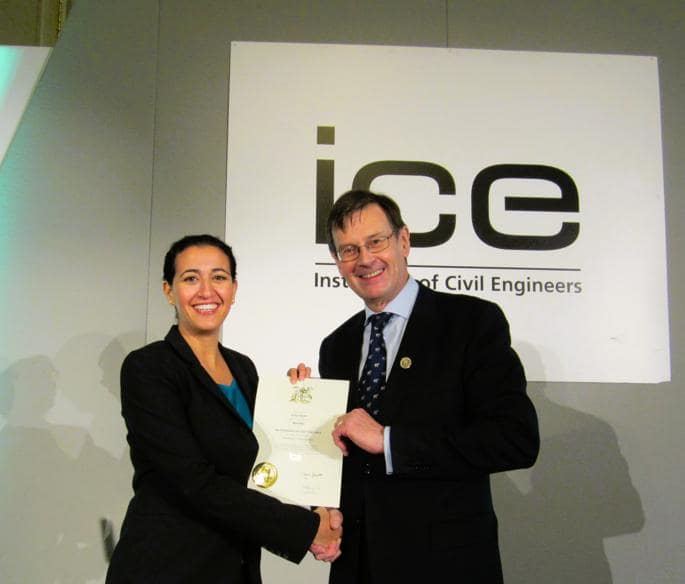
Dual jurisdiction licensure is rare — and it gives engineers the ability to operate at elevated rigor levels across regulatory environments. Suha Atiyeh’s combination as a Professional Engineer in Washington DC and Virginia, and Chartered Engineer in the UK, offers a unique technical lens that supports innovation and sustainable design at global scale.
Her education at Clemson University established a highly analytical hydrology and environmental systems foundation. Throughout her early consulting experience with globally ranked firms, she learned to translate regulatory constraints into usable innovation — a skill that becomes even more essential across multiple rule systems.
In Washington DC, her work illustrates this multi-framework thinking. Wheeler Road stormwater upgrades, MLK Jr. Avenue green infrastructure, bioswales and permeable pavements at St. Elizabeths and Kenilworth Courts — these projects use environmentally progressive strategies while remaining aligned with US municipal standards. This same engineer, however, can also adapt advanced sustainability in the UAE at Masdar City, and in regional flood mitigation programs where resource challenges are completely different.
Her certification stack (LEED AP, Envision Sustainability Professional, Estidama Pearl Qualified Professional) reinforces this international fluency — she is credentialed in sustainability ecosystems used in different world regions.
As ICE Representative for the US Mid-Atlantic South Region, she now helps align global engineering thinking between practitioners. For future engineers, her example proves that multi-regional fluency unlocks better solutions — because it increases the option set of what is possible.